
Which Recovery Boots for Runners?
Magdalena Bürk
Running constantly stresses the legs. The higher the volume, intensity, and competition frequency, the more important recovery becomes. That's exactly why more and more athletes are turning to Recovery Boots – either mobile for on-the-go or stationary for fixed routines at home.
This article focuses on two clear categories:
Why Recovery Boots Make Sense for Runners
Stress on Leg Muscles While Running
Running is a sport with high, repetitive stress. Calves, thighs, shins, and feet work through many repetitions in each session. This is compounded by long training cycles, competition phases, and preparations for marathons or triathlons.
Especially during intense weeks, a mix of heavy legs, muscular fatigue, and the feeling of not being completely fresh for the next session can quickly develop.
How Compression Massage Supports Recovery
Compression massage for runners targets exactly this. Recovery Boots work with multiple air chambers that create pressure waves along the leg, allowing for an even massage. Many runners use them to consciously relieve their legs after intense sessions, reduce muscular tension, and start the next session more structured.
Recover to rise.
What types of Recovery Boots are there?

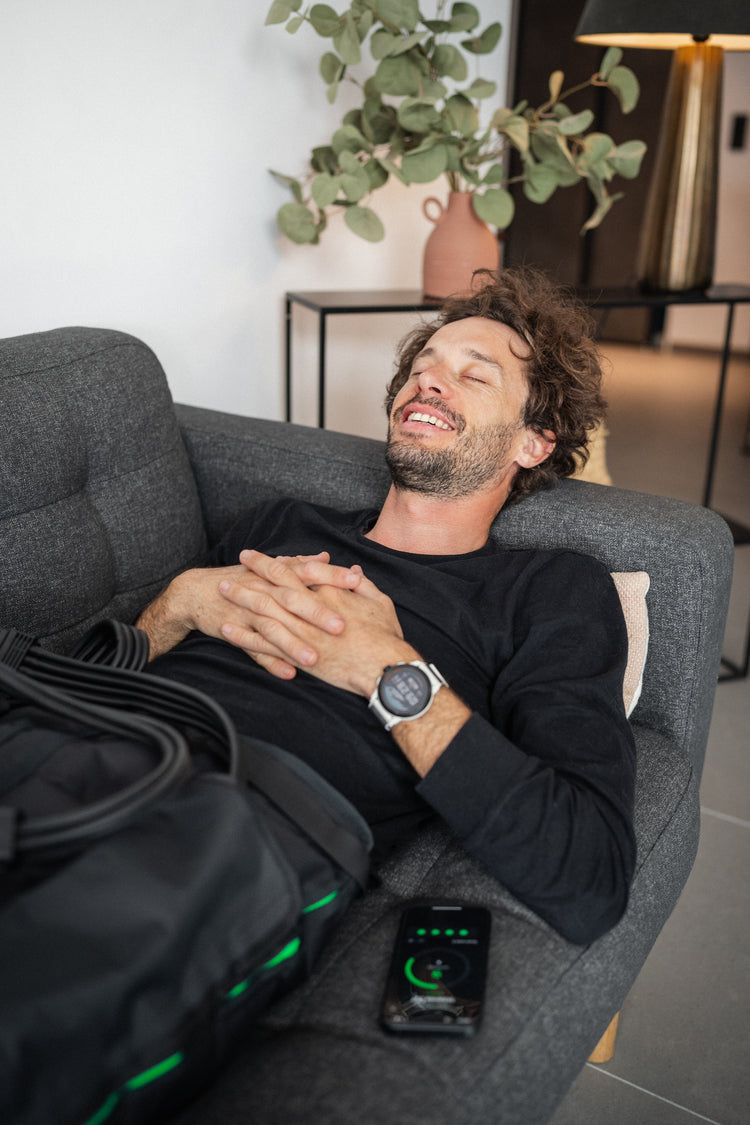
Mobile
Recovery, wherever you want – Whether it's a competition weekend or a training camp.
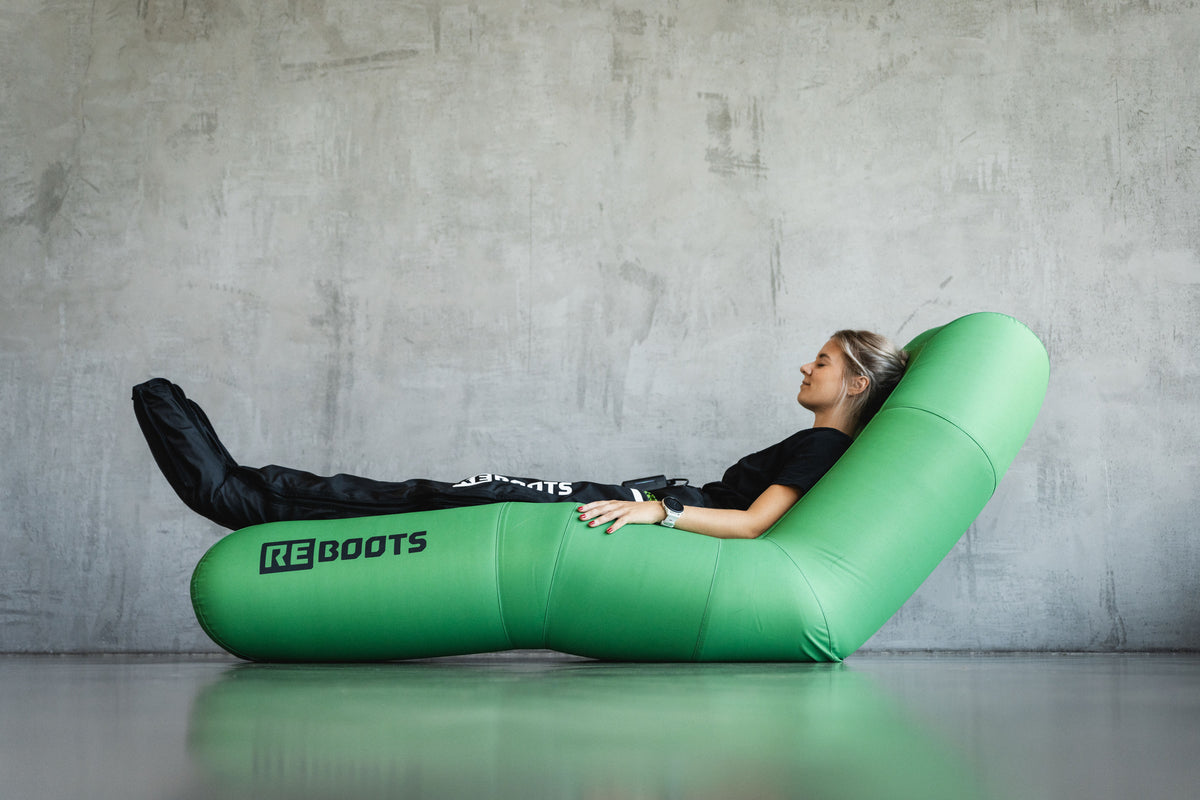
Stationary
Intensive regeneration for home or practice.
The Go X Family
Mobile Recovery Boots for Runners

Who mobile Recovery Boots are ideal for
The Reboots Go X Family is particularly interesting for runners who are often on the go. This includes athletes with competitions, triathletes, commuters to training, or anyone who doesn't want to tie their Recovery to a fixed location. Those who want to quickly start a Recovery session after tempo runs, long runs, or competitions benefit from exactly this mobility.

Benefits of Mobile Systems
The biggest advantage of mobile systems is their flexibility. They are tubeless, easy to transport, quick to set up, and can be easily controlled via an app. This makes them especially attractive for anyone who wants to use Recovery Boots at home or on the go. Especially after competitions or training camps, it's an advantage when recovery doesn't have to wait until you're back home.

Typical Application for Runners
Many runners use the Reboots Go X after tempo runs, long runs, or directly after races. Typically, sessions last 20–40 minutes once the exertion is over and the legs are consciously winding down. The application is particularly effective within the first 60 minutes after training – with the mobile Go X Family, you can take advantage of this open window anywhere.
Test. Feel. Convince.
Rent Reboots
Reboots One Lite
Stationary Recovery Boots

When Stationary Equipment is Worth It
The Reboots One Lite is especially useful if you don't need a mobile device and your recovery sessions mostly take place at home in a fixed location. If you don't travel much and consciously integrate recovery into your routine, a stationary system might be the better choice.

Advantages of Stationary Systems
Stationary systems generally offer more precision, more pressure, and more options for customization. At the same time, they don't rely on batteries but are always ready to use via a power outlet. For many athletes, this means one thing above all: reliable, longer, and intentionally planned recovery sessions at home.

Typical use at home
Many runners use the One Lite after interval training, after long runs, or on rest days. It fits particularly well into a solid evening routine or clearly planned recovery days.

Reboots
Reboots One Lite
Regular price
CHF 689.00
Regular price
Sale price
CHF 689.00
Unit price
per
Shipping calculated at checkout.


Which type suits you?
Mobile vs. stationary Recovery Boots
Mobility
If you're often on the go, running competitions, or organizing training and daily life flexibly, mobile systems are usually the better choice. This is where the Go X Family shows its strength.
Performance and Customization
If you regularly recover at home and value more programs and a stationary routine, the One Lite is often the more suitable solution.
Training Routine
Your decision heavily depends on what your training looks like. Those who want to use Recovery spontaneously and flexibly benefit from mobile devices. Those who prefer fixed routines are usually better off with a stationary system.
Value for Money
Mobile systems score with flexibility, stationary models with routines and more customization. The key is not just the price, but how well the system fits into your running routine.
When Runners Should Use Recovery Boots

After intense training sessions

On recovery days

After Competitions
Conclusion: Which Recovery Boots for Runners?
If you're often on the go and want flexible recovery, the Go X Family is a great fit for you. On the other hand, if you recover regularly and systematically at home, the One Lite is the more sensible choice.
However, the key is not which system is generally better, but which Recovery Boots for runners better suit your training routine.


