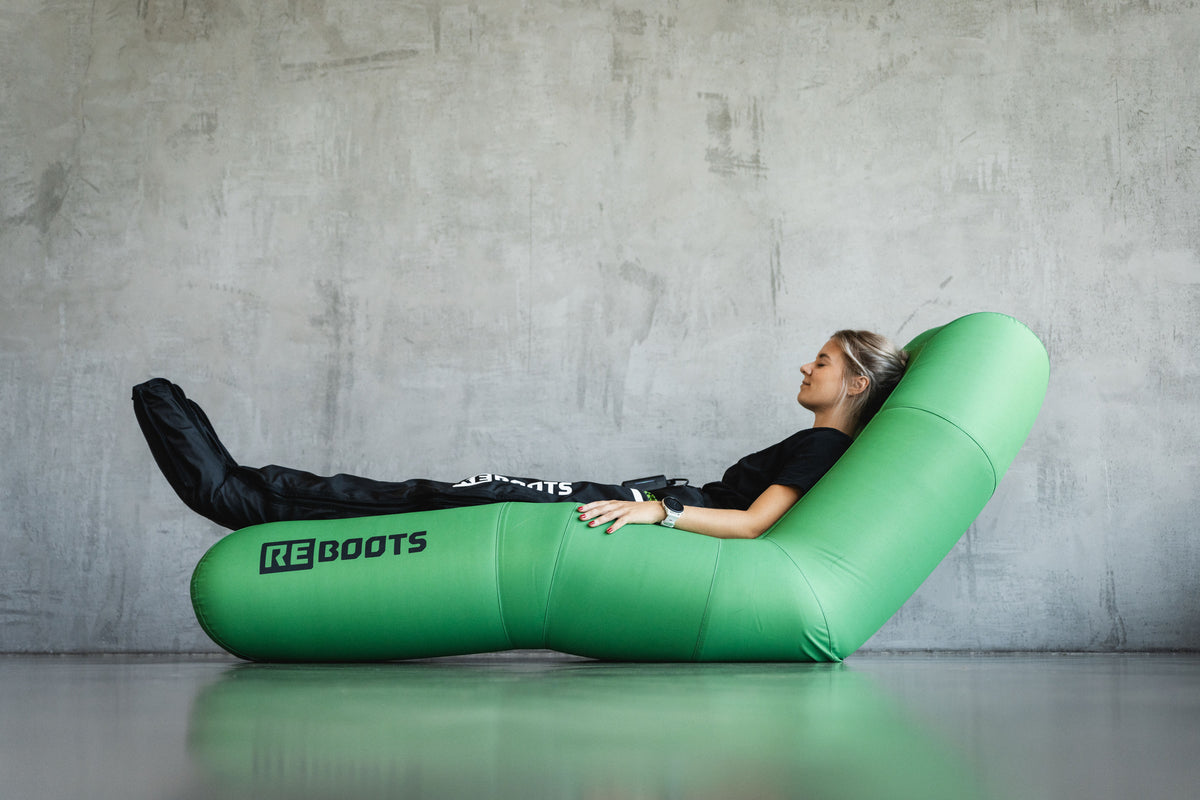
How much recovery does my body need?
Magdalena Bürk
Training is the stimulus – recovery is the progress. But rest isn't a one-size-fits-all: Triathlon, running, and soccer challenge the body in different ways. Here, you'll learn how recovery needs differ and what you should pay attention to depending on the sport.
Why Recovery Isn't the Same for Everyone
Training challenges the body in various ways. The key factors determining the need for recovery are mainly:
- **Type of strain** (endurance, impact, sprint, change of direction)
- **Intensity profiles** (steady vs. explosive)
- **Variety of movement** (unilateral or multidimensional)
- **Training and competition structure** (season, match days, double sessions)
**Basic rule:**
👉 The higher, more frequent, and more complex the strain, the more precise the recovery planning must be.

How much recovery does my body need as a triathlete?
TRIATHLON
Typical Load in Triathlon
Triathlon combines three endurance sports with completely different demands. This leads to:
- very high weekly volume
- cumulative fatigue from swimming, cycling, and running
- frequent double sessions
- short breaks between efforts
The challenge lies less in individual tough sessions, but in the sum of all stimuli.
Recovery Needs of Triathletes
Triathletes particularly benefit from structured, daily recovery:
- Sleep: 8–9 hours per night
- Active Recovery: daily low-intensity movement (in addition)
- Cold & Compression: to reduce systemic fatigue
- At least one complete rest day per week
If recovery is neglected, the risk of persistent fatigue, performance plateaus, and mental exhaustion increases.
Meaningful Recovery Approaches for Triathletes

COLD THERAPY
After intense or long sessions, cold applications are often used to reduce the feeling of heaviness.

COMPRESSION
Additionally, compression applications for legs and lymph flow, as well as mobility and breathing exercises, help regulate stress.

How much recovery does my body need as a runner?
RUNNING
Running is a monostructural movement with a high number of repetitions. It is characterized by:
- strong impact load
- focus on legs, tendons, and joints
- high eccentric strain
- comparatively low variety of movement
It's not the cardiovascular system, but rather tendons and structures that are often the limiting factor.
Recovery Needs of Runners
For runners, it's not the amount but the timing of recovery that matters:
- Sleep: 7–8.5 hours
- Load management: clear separation of hard and easy days
- Recovery days: active rather than completely passive
- Focus on tendon recovery
A common mistake is having too many intense sessions without enough recovery time.


How much recovery does my body need as a footballer?
FOOTBALL
Typical Strain in Soccer
Soccer is characterized by high-intensity alternating loads:
- Sprints, stop-and-go, changes of direction
- high eccentric load
- duels and contact
- games, training, and frequent travel
The strain is less predictable and heavily dependent on the course of the game.
Recovery Needs of Football Players
In football, the focus is primarily on immediate recovery:
- Sleep: about 8 hours, especially important on match day +1
- Direct recovery after matches
- Prioritize neuromuscular recovery
- Actively address microtraumas
Especially in amateur sports, recovery is often underestimated, even though it is crucial for consistency and injury prevention.


How do I know if my body needs more recovery?

Persistent fatigue & lack of motivation

Decreasing Performance Values

Decreasing Performance Values

Elevated Resting Heart Rate
CONCLUSION
How much recovery you need is individual – and depends greatly on your sport. Triathlon, running, and soccer stress the body differently and therefore require different recovery strategies.
Those who plan their recovery appropriately remain more consistent in training and develop more sustainably.