
Compression Massage for Runners: The Complete Recovery Guide
Magdalena Bürk
Running challenges the body with every session. Calves, thighs, feet, and joints work through many repetitions—especially during long runs, intervals, or competitions.
For training to lead to progress, your body needs recovery. This is where compression therapy comes into play. It can help reduce heavy legs, support muscle regeneration, and consciously integrate recovery after running into your training routine.


Why Recovery is So Important for Runners
Running causes small micro-stresses in muscles and tissue. This is normal and part of the training stimulus. It becomes problematic when stress and recovery are consistently mismatched.
Typical consequences of too little Recovery:
- heavy legs
- muscle soreness after running
- decreased training quality
- higher risk of overuse injuries
- longer recovery time after intense sessions
Those who run regularly should plan recovery just as carefully as training.

What is compression therapy?
Compression therapy means applying pressure to the legs from the outside. The goal is to support blood circulation and lymph flow and reduce the feeling of tired legs.
In running sports, there are two well-known forms:
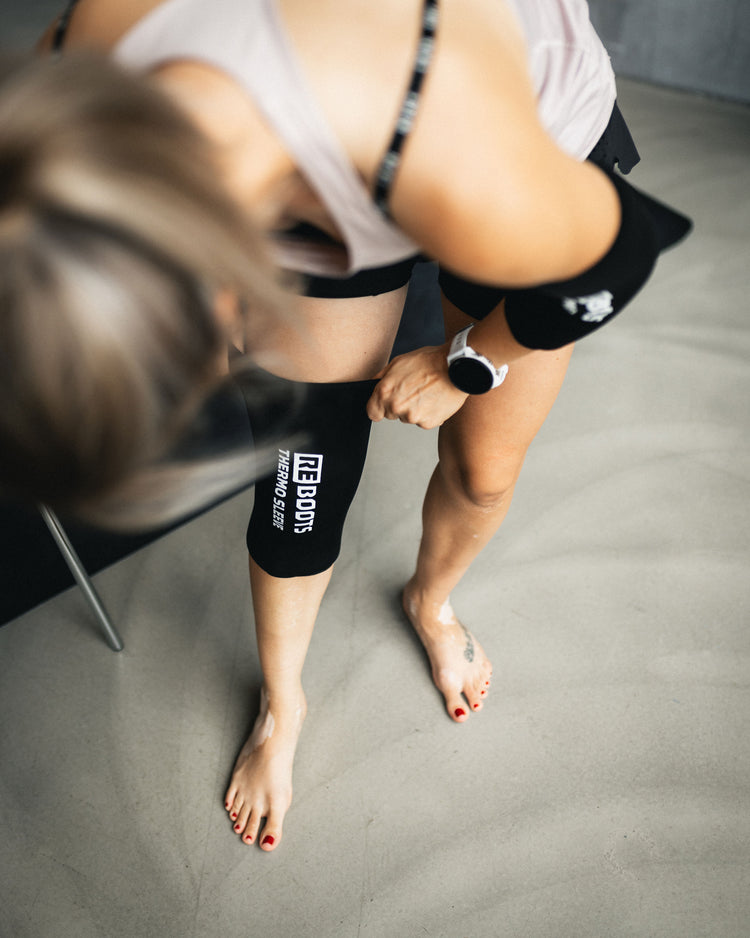
Compression Socks & Sleeves
Compression socks or sleeves create constant pressure. They are worn either during running or after training. Especially practical: They are lightweight, uncomplicated, and ready to use quickly.
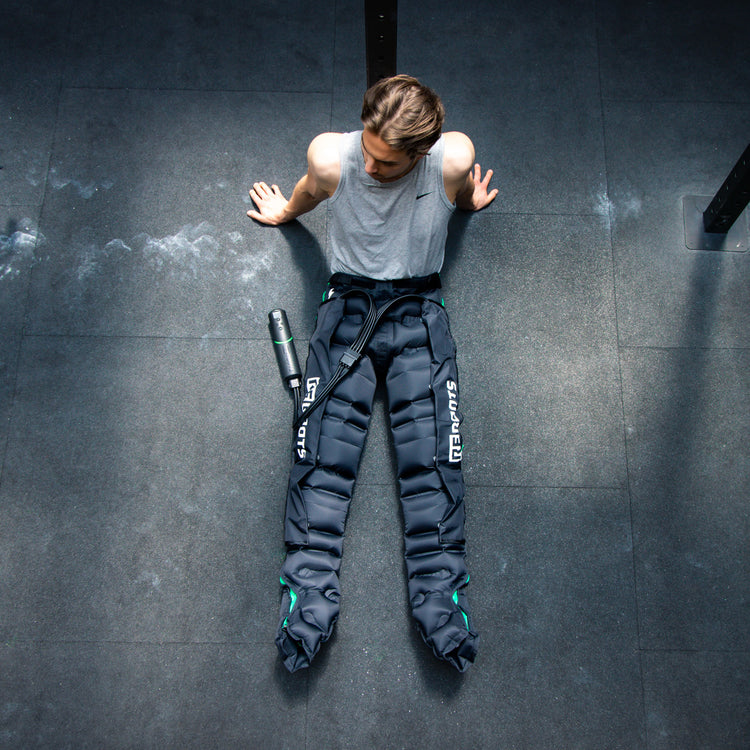
Pneumatic Compression with Recovery Boots
Recovery Boots work with air pressure chambers that fill and empty one after the other. This creates a dynamic compression massage for the legs.
Systems like Reboots Recovery Boots are used especially after intense sessions, long runs, or competitions to actively relieve the legs.
How Compression Supports Recovery After Running
When is compression particularly beneficial for runners?
Compression can generally be used after many running sessions. However, it is especially beneficial after activities that heavily strain the legs.
After long runs
Long runs put significant stress on muscles, tendons, and joints. A Recovery session after the run can help relieve the legs more quickly.
After interval training
Speed sessions often cause high muscular tension. Compression can help you consciously enter recovery after such sessions.
After competitions
After 10 km, half marathon, marathon, or triathlon, the body is heavily taxed. Recovery Boots can be a valuable part of the recovery routine here.
While traveling
Long car rides or flights can further exacerbate heavy legs. Mobile compression systems are especially practical if you want to recover on the go.
Perfect Match?
DISCOVER OUR PRODUCT WORLDS

Compression socks or Recovery Boots?
Both can be useful – depending on your goals and daily routine.
Compression socks are suitable if you:
- are looking for a simple solution
- want to wear compression on the go
- need light support after running
- prefer a passive application
Recovery Boots are suitable if you:
- want to recover more intensively
- train hard regularly
- know the feeling of heavy legs after runs
- want to establish a solid Recovery routine
- want to use compression comfortably at home or on the go
Recovery Boots are thus a modern alternative to compression socks – especially for runners who want to make their recovery more active.
Tips for Proper Use

Duration
For Recovery Boots, 20 to 30 minutes per session is a good guideline. If needed, you can adjust the application based on your exertion.

Intensity
The pressure should be noticeable but comfortable. Pain, numbness, or uncomfortable pressure are signs to stop the session or reduce the intensity.

Regularity
Compression doesn't have to be daily. It's especially beneficial after intense sessions, long runs, competitions, or on dedicated Recovery days.
Avoid Common Mistakes

Too much pressure
Wrong size
Rely on compression only
Conclusion:
Compression therapy for better running recovery
Compression therapy can help runners make their recovery after running more intentional. Especially after long runs, intervals, or races, it can relieve heavy legs and support muscle recovery.
Compression socks are a simple entry-level solution. Recovery Boots offer a more intensive, dynamic application through pneumatic compression and are particularly suited for runners who train regularly and want to actively plan their recovery.
Because in the end, the rule is: Those who recover better can train more consistently in the long run.


