
Compression Massage Before vs. After: Results, Effects & Experiences
Magdalena Bürk
Whether after running, cycling, or an intense workout: Heavy legs, muscle soreness, and slow recovery can quickly become noticeable. Even after long days or a lot of sitting, your legs often feel tired and strained.
Compression massage can make a real difference here. But what really changes before vs. after? In this article, you'll learn what effects are realistic and how you can specifically support your legs in recovery.
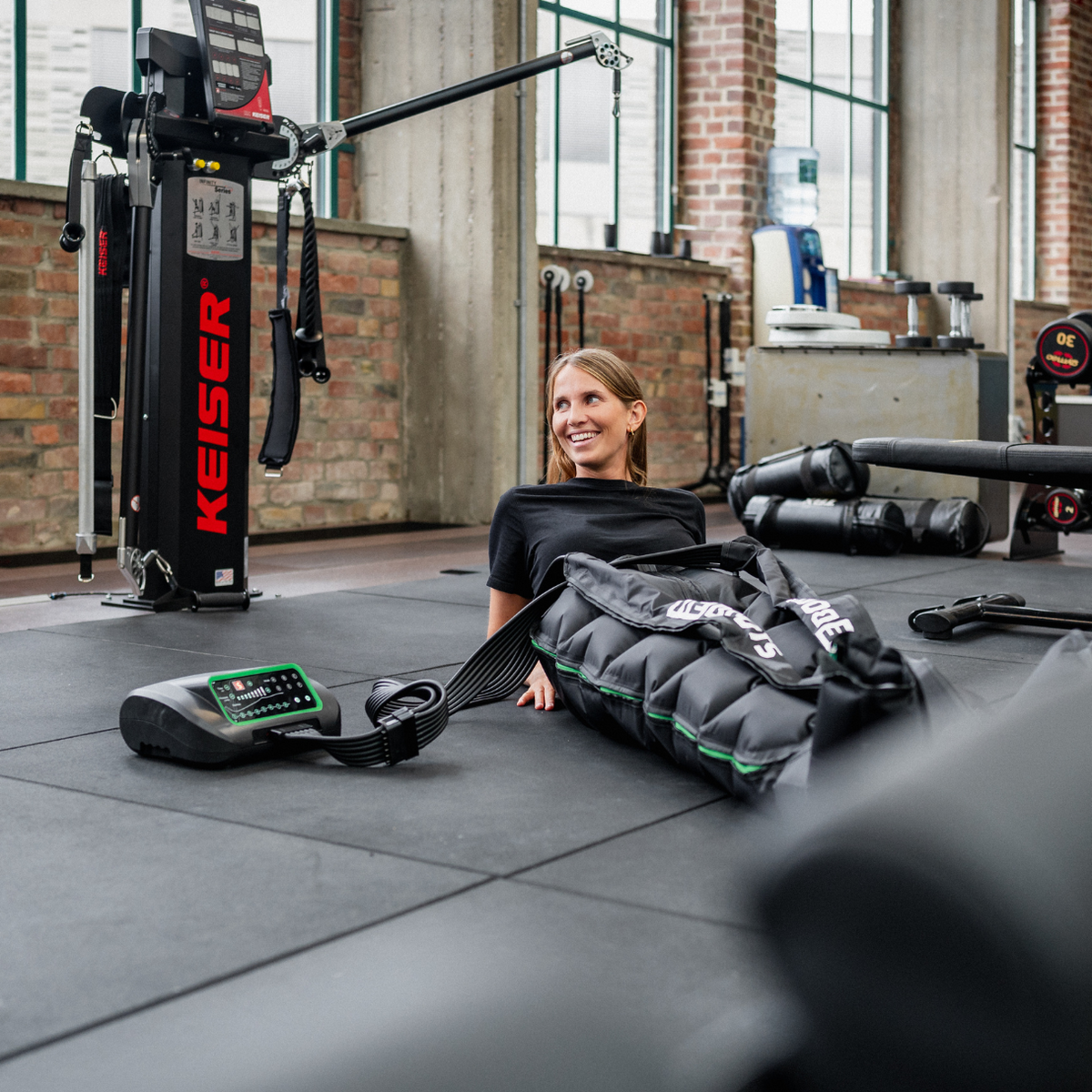
Let the magic happen
HOW DOES COMPRESSION MASSAGE WORK?
Intense training challenges your muscles – stiff legs and the risk of injuries increase.
Compression massage uses air chambers that inflate and apply pressure to your legs in a set sequence – from the feet upwards, in a pumping motion. This sequential compression mimics manual lymphatic drainage and supports the return flow of blood and lymphatic fluid. Waste products like lactate are removed more quickly, and fresh blood flows in.
First Reset. Then Restart.



Before:
Typical condition without compression massage
Before using, legs often feel heavy, tight, or tired—especially after intense running sessions, long bike rides, tough strength training, or competitions.
After training, small micro-stresses occur in the muscles. Additionally, metabolic byproducts and fluids may be transported away more slowly. This is normal but can feel uncomfortable and affect the next session.
Without active Recovery, it often takes longer for the legs to feel fresh again. Depending on the intensity, it can take 24 to 72 hours for muscle soreness and the feeling of heaviness to significantly decrease.
After:
What changes with compression massage?

Direct effects after application
Many users report feeling lighter legs immediately after the session. The muscles feel more relaxed, the sensation of pressure decreases, and the legs feel more activated. This effect is created by the alternating pressure of the air chambers. The application can support blood and lymph circulation and promote the natural lymphatic flow.

Short-term effects within a few hours
A few hours after the application, the focus is mainly on the Recovery feeling. Many experience less tension in their legs and feel more mobile again after intense sessions. Important: Compression massage is not a magic trick. It doesn't guarantee to completely eliminate muscle soreness. But it can help make leg recovery more pleasant and manageable.

Long-term effects with regular use
The biggest difference doesn't come from a single session, but from routine. Those who regularly use compression massage after exertion consciously integrate Recovery into their daily life. This can be particularly exciting for athletes who train several times a week. Better recovery routines help you start each session feeling fresher.

Scientifically proven
REBOOTS ACCELERATE RECOVERY
The study in collaboration with Innowearable shows that our compression massage regenerates the neuromuscular nervous system more effectively than passive recovery – for faster coordination, greater resilience, and improved training readiness.
Who will feel the results the most?
Application:
How to Get the Best Post-Results
For most sessions, 20 to 30 minutes with moderate pressure is enough. After sports, compression massage can support your Recovery, and in the evening, it helps relieve heavy legs.
Before training: apply briefly and lightly – activate, don't fatigue.
Important: Use regularly, dose comfortably, and combine with sleep, hydration, and movement.
Which devices deliver the best results?
The best results come from a system that fits your lifestyle. Key factors are air chambers, pressure range, programs, fit, and frequency of use.
Reboots Go Lite: mobile and flexible
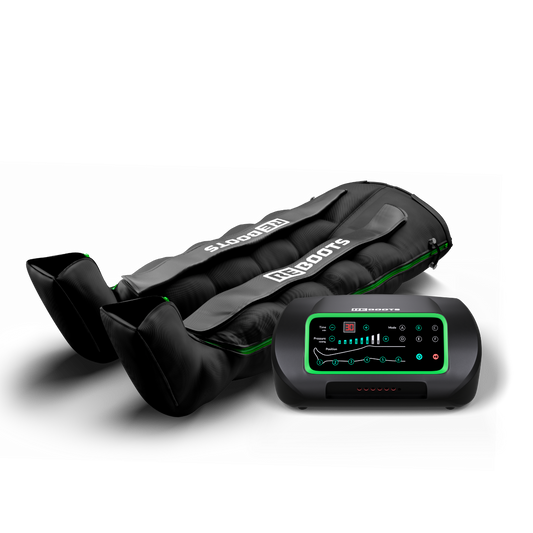
The Reboots Go Lite are ideal if you want to use compression massage on the go – at the gym, while traveling, or at home. They are the entry point into Reboots compression massage, featuring 4 overlapping air chambers and app control. Reboots calls the Go Lite the beginner's favorite starting at €449.
Reboots One Lite: more intense home Recovery
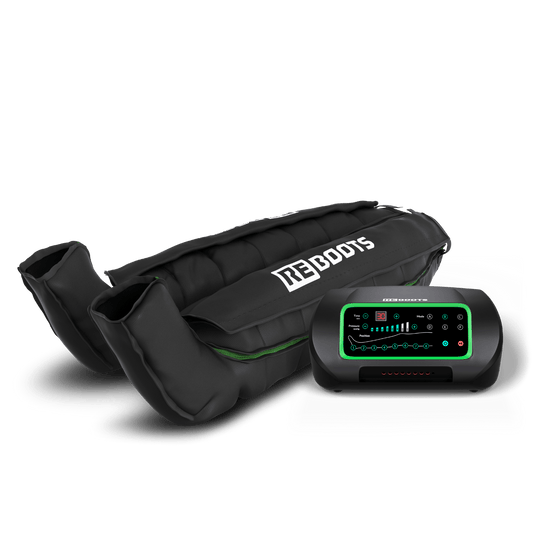
The Reboots One Lite is the stronger choice for regular use at home. It operates with 6 overlapping air chambers, up to 240 mmHg pressure, and 6 massage programs. Additionally, it fully encloses the legs up to the hip and gluteal area.
Especially important: The One Lite is certified as a medical device CE0598. The CE certification is not a promise of healing, but it shows that the device is certified for its defined purpose.
Conclusion:
Is compression massage worth it before and after?
Yes, if you have realistic expectations. Compression massage won't guarantee to prevent muscle soreness and doesn't replace a solid Recovery foundation. But it can make a noticeable difference. Beforehand, legs often feel heavy, tired, or tense. Afterwards, many report feeling lighter, looser, and better activated legs. Especially for athletes, frequent travelers, and people with heavy legs in everyday life, compression massage can be a powerful Recovery component.


