Ice baths after training: Hype or real recovery weapon?
Magdalena Bürk
Ice baths have made their way from professional sports into the daily training routines of many athletes. On social media, they are seen as the ultimate recovery tool, a testament to discipline and mental strength.
But beyond the hype, the crucial question arises: Are ice baths really beneficial after training – or are they often used incorrectly?
In this article, you'll learn when ice baths effectively support recovery, where their limits lie, and how they compare to modern recovery technology.
Why Recovery is More Than Just a "Break"
Training sets targeted stimuli. Recovery determines how the body handles them.
After intense sessions, several processes occur simultaneously in the body:
- Micro-stresses in the muscles
- Increased metabolic activity
- Temporary inflammatory responses
- Strain on the nervous system
Important: Not every inflammation is negative.
It's part of the adaptation process – the foundation for performance development.
This is where the use of cold becomes exciting – but also critical.

What exactly are ice baths?
Ice baths are a form of targeted cold application where the body—usually up to the chest or fully submerged—is exposed to cold water for a short period.
Typical parameters:
- Temperature: approx. 5–15 °C
- Duration: 5–15 minutes
The focus is not on comfort, but on a clear cold stimulus on:
- the vascular reaction
- the nervous system
- the subjective perception of stress and recovery
What happens in the body during an ice bath?
Cold triggers several natural reactions:
- Vasoconstriction: Blood vessels initially constrict
- Rebound effect: After application, there is increased blood flow
- Reduced pain perception: Cold alters the perception of strain
- Strong neural stimulus: Focus, alertness, or calming – depending on the context
Important: These effects are temporary and highly dependent on timing.
Benefits of Ice Baths After Training
When used correctly, ice baths can be beneficial for many athletes – especially in certain phases.
Many athletes subjectively report:
- less muscle soreness
- lighter legs
- faster mental "reset"
Especially in endurance and team sports, ice baths are often used selectively.
To properly evaluate ice baths, it's worth comparing them with other recovery methods:
Comparison to Other Methods
Ice Baths
- intense, short-term stimulus
- mentally challenging
- useful in acute or competition phases
- less suitable for regular everyday recovery
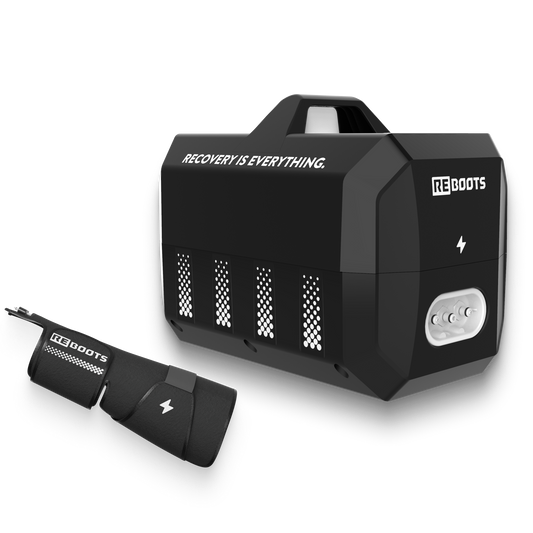
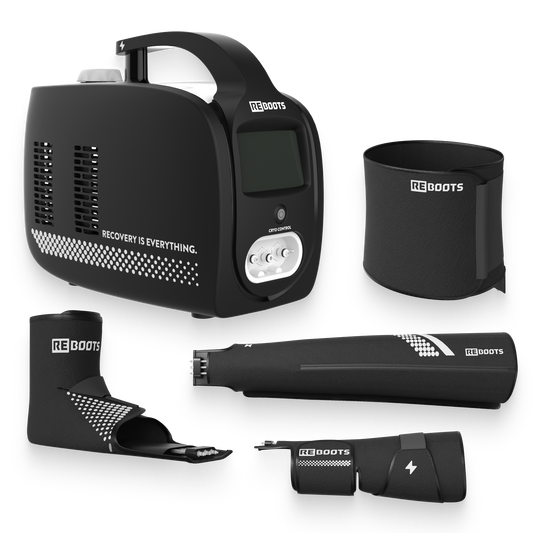
Compression Massage
- promotes circulation
- suitable for everyday use
- easily adjustable (pressure, duration)
- does not interfere with training adaptations
Heat Applications
- mobilizing
- relaxing
- more suitable for preparation or rest days
Massage Guns
- effective on specific points
- portable, but limited depth
👉 Assessment: Ice baths are one tool among many – not a substitute for sleep, training management, or structured Recovery.

Product Finder
Find your Perfect Match
Using Ice Baths Correctly: Best Practices
If you want to use ice baths, then strategically:
- Timing: not directly after hypertrophy training
- Frequency: occasionally instead of daily
- Duration: short & controlled
- Combination: cold immediately, compression delayed
Many athletes consciously rely on:
- Cold for the immediate phase after exertion
- Compression massage for sustainable recovery afterwards
Conclusion
Ice baths can be a valuable tool – when used strategically. They are particularly suitable during intense training phases or when recovery time is short, but they are not a universal solution for every training situation. Timing, training goals, and moderation are key.
-
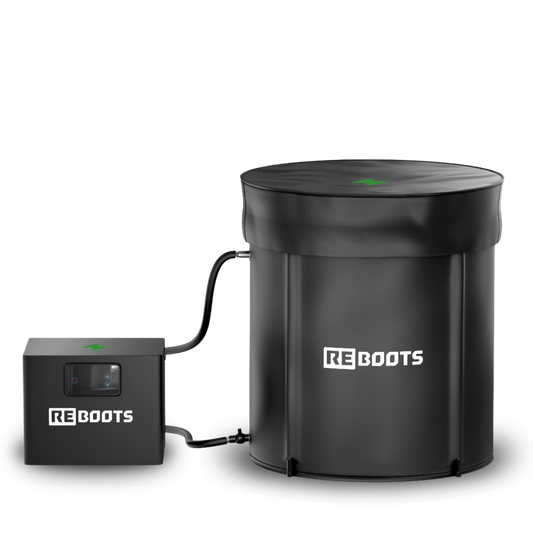
Ice Tub Pro
Regular price € 1.199,00Regular priceUnit price per- Combination of Ice Tub & cooler
- Temperature setting up to 4 °C
- 7-Layer Insulation