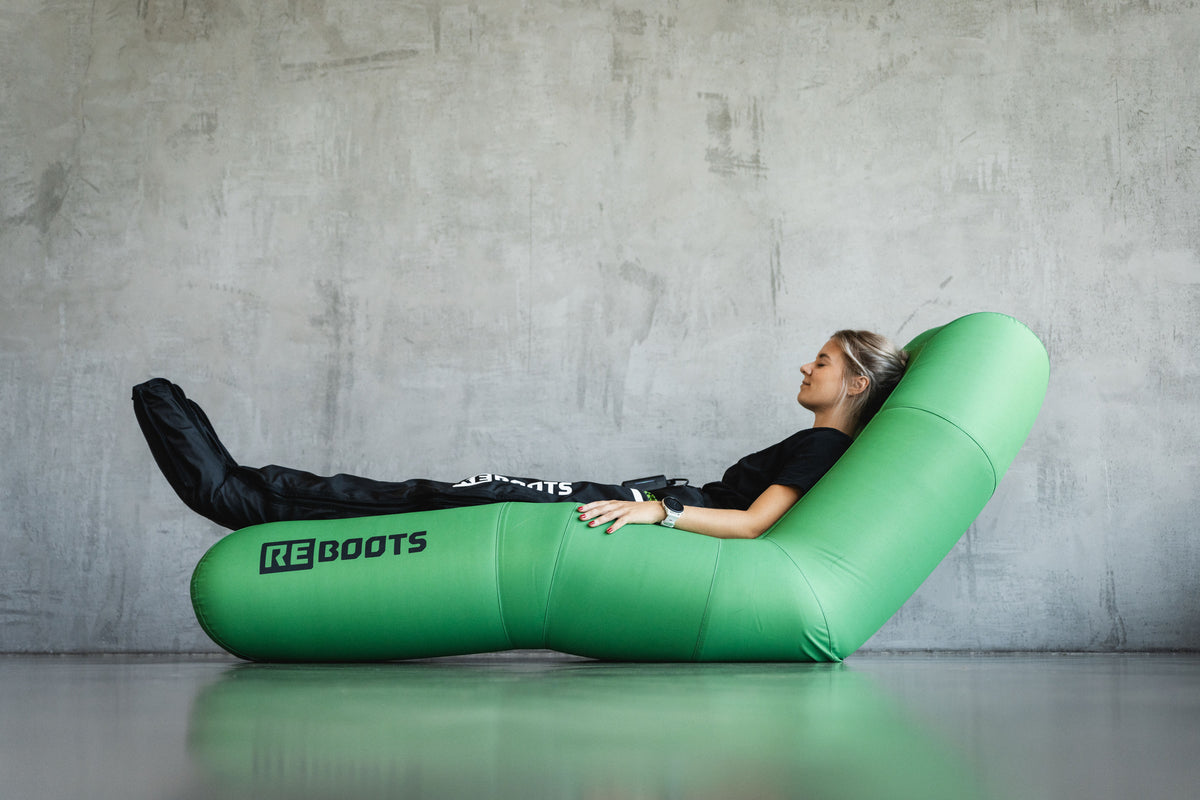
How do Recovery Boots and Pants work?
Magdalena Bürk
Recovery is no longer just an optional balance to training. Whether in competitive or recreational sports, in everyday fitness, or after long days of sitting: The body needs targeted recovery stimuli to process stress effectively. This is exactly where Recovery Boots and Recovery Pants are becoming increasingly important.
Compared to traditional methods like massage or foam rolling, they rely on active, controllable compression – comfortable, reproducible, and suitable for everyday use. But how exactly do Recovery Boots and Pants work? And what is the difference between the two systems?
This article explains the functionality, mechanisms of action, and areas of application in an understandable and practical way.



How do Recovery Boots and Pants basically work?
Recovery Boots and Pants work with pneumatic compression.
This means: Air chambers are controlled to fill and release pressure, applying a rhythmic pressure on the legs and – depending on the product – also on the hips and buttocks.
Unlike passive compression products, this creates an active stimulus that can be specifically controlled.
Static vs. dynamic compression
- Static compression (e.g., compression stockings): even, constant pressure without movement
- Dynamic compression (Recovery Boots & Pants): alternating pressure in clearly defined cycles and zones
The dynamic variant allows for a customizable application – depending on exertion, daily condition, and personal feeling.
How does pneumatic compression work in Recovery Boots?
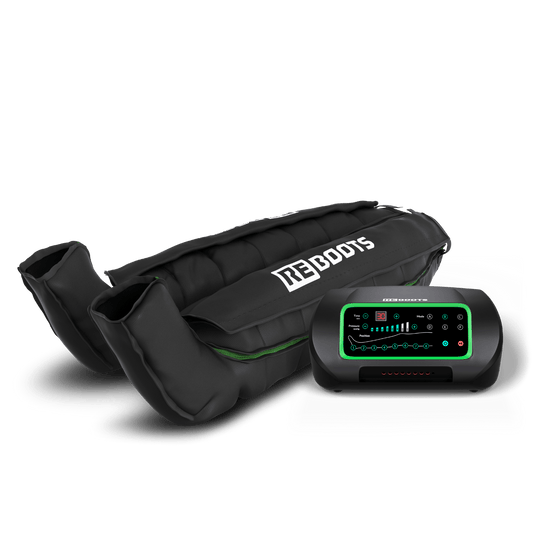
Recovery Boots and Pants consist of:
- several air chambers arranged along the leg
- a control unit that regulates pressure, programs, and duration
- clearly defined pressure zones from foot to knee or thigh
Procedure of an Application
The compression usually starts at the foot and gradually works its way towards the heart. The chambers are filled and emptied one after the other – in a steady, wave-like rhythm. This process simulates a directed pressure movement along the legs.Impact on Blood and Lymph Flow
Through the cyclical pressure: - the return flow of blood and tissue fluid is supported - the subjective feeling of heaviness or tension is reduced - the perception of recovery after exertion is promoted The application is passive and requires no active muscle work.Boots vs. Pants
Recovery Pants take it a step further than Boots: They extend compression to the thighs, hip area & buttocks.
This means a larger body area is involved in the application at the same time.
Boots vs. Pants – the key differences
- Recovery Boots: focused on lower legs and calves, compact and versatile
- Recovery Pants: more comprehensive application for leg axes and hip region


How do Recovery Boots and Pants support recovery?
The effect results from the combination of several factors:
- Support for the removal of metabolic waste products (e.g., lactate after intense sessions)
- Promotion of blood circulation through alternating pressure
- Reduction of swelling and tension sensations
- Structured recovery through deliberately planned rest phases
Many users also report a heightened sense of lightness and relaxation after use.
How does a session with Recovery Boots and Pants feel?
Typical Session Flow
- Putting on the Boots or Pants
- Selecting the program, pressure level, and duration
- Relaxing while lying or sitting during the session
Pressure Levels & Programs
Modern systems offer:
- multiple pressure intensities
- various programs (e.g., rhythmic, consistent, zone-based)
The pressure should feel pleasant yet noticeable – never painful.
Duration & Comfort
- Typical duration: 20–40 minutes
- The session is quiet, consistent, and passive
- Comfort features like chamber deactivation enhance adaptability
Why New Users Often Perceive the Pressure More Intensely
When using Reboots for the first time, the pressure often feels very intense. This is normal and not a sign that something is wrong.
Three factors play a role in this.
- Not knowing what to expect makes you more sensitive to the sensation.
- Muscle tension: Unfamiliar compression meets muscles that haven't yet learned to relax during use.
- Lack of routine: With regular use, the body gets accustomed to the rhythm and intensity of the programs.
Many users report that the same pressure level feels significantly more comfortable after a few sessions compared to the first time. This isn't because the pressure decreases, but because the body and mind can better process the experience.
If you're unsure at the beginning: Simply start with a lower pressure level and gradually increase it. The app provides good guidance.
Conclusion: Why Recovery Boots and Pants Make Sense
Recovery Boots and Pants use dynamic, pneumatic compression to specifically and reliably support recovery. They offer controllable applications, consistent pressure without personal effort, and can be flexibly integrated into sports and daily routines.
Anyone looking to plan recovery consciously will find them an efficient addition to traditional recovery methods.