
Triathlon: The Underrated 4th Discipline – Recovery
Magdalena Bürk
Triathlon consists of three sports – but the real challenge lies in between: Recovery.
Many triathletes optimize training, equipment, and nutrition down to the last detail, but neglect the area that determines performance development and resilience.
Many triathletes optimize training, equipment, and nutrition down to the last detail, but neglect the area that determines performance development and resilience.
Recovery is not an "add-on". It is the 4th discipline in triathlon.
In this article, you'll learn:
- why recovery is so crucial in triathlon
- which recovery mistakes most people make
- which methods really work
- and how to develop a recovery routine that makes your training routine smarter
The mix is what makes triathlon so challenging.
The 3 Challenges in Triathlon

Swimming
Swimming primarily activates the shoulder girdle, upper back, and core – technically demanding and coordinatively challenging, yet comparatively easy on the joints.

Cycling
On the bike, a long, steady endurance effort dominates with high pressure on the quadriceps, hips, and gluteal muscles.

Running
Running involves the strongest impact: high shock forces, intense strain on muscles, joints, and fasciae – and thus the greatest risk of overuse.
Consequence: Recovery should not be thought of as discipline-specific – it must be planned holistically.
The Biggest Recovery Mistakes Made by Triathletes

too little sleep
Missing Deload Weeks
No clear periodization
Too intense brick workouts without recovery
Lack of Active Recovery
Too few tools for quick recovery
Cold & compression applications mistimed
The Best Recovery Methods for Triathletes

Recovery Boots & Compression Massage
Recovery methods like compression massage are especially effective after long bike rides, intense running sessions, or during training camps. They can help reduce the feeling of heaviness in the legs, noticeably promote muscle relief, and get you back to mental and physical readiness faster. Ideally, aim for 20–40 minutes at medium pressure.
Cold Therapy
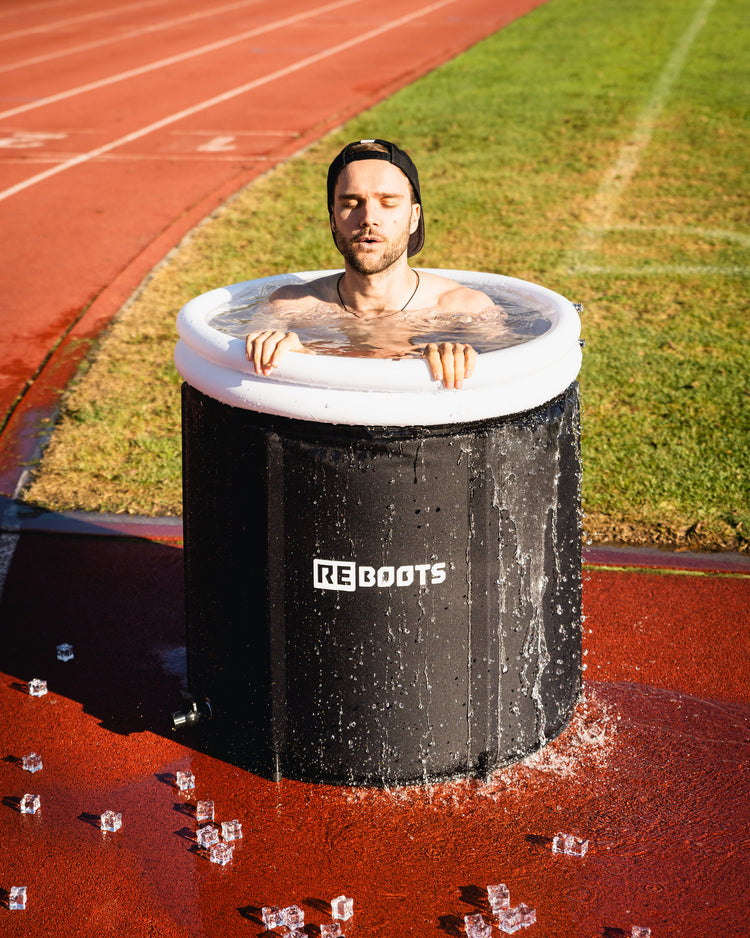
Targeted cold applications show their effect after tough running sessions or competitions – for example, through an ice bath in the Ice Tub, short cold water stimuli, or targeted applications with the Thermo Sleeves. They can create a fresh body sensation and help reduce the feeling of heavy legs.
ACTIVE RECOVERY
“Easy” is not a synonym for “unnecessary.”
- easy swimming
- mobility & foam rolling
- short recovery rides
Ideal on days after brick sessions or long runs.
HEAT THERAPY
Great for relaxed muscles, mobility, and well-being.
- warm therapy wraps
- sauna
- hot/cold contrast
NUTRITION & HYDRATION
An underestimated area of triathlon recovery.
- quick replenishment of carbohydrate stores
- proteins for structural recovery
- omega-3 fats, micronutrients & adequate fluids
SLEEP & HRV TRACKING
The most important parameter in triathlon training.
- sleep quality determines training adaptation
- HRV shows when the body is ready – and when it’s not
- indispensable during intensive weeks & race week

Recovery Routines for Triathletes (Practical Examples)
After long bike rides
20–40 min compression, short hip mobility, quick high-carb refuel.
After intense running intervals
Apply cold, light compression, early to bed & screens off.
In training camp
Daily compression, planned deloads, ensure recovery on the go.
Before the competition
Light activation, short compression, mental focus.
After the competition
Compression + nutrition + cold + sleep + very light mobility.
Conclusion: Recovery – the 4th discipline that decides everything
Triathlon demands a lot – and recovery determines how much of it you can handle.
Those who prioritize rest, win:
- more training volume
- better adaptation
- less overload
- more performance on race day
Recovery is not a luxury. It's the game changer.