
Pre-Race Routine: The Optimal Preparation Before the Competition
Magdalena Bürk
The last 48 to 72 hours before the competition determine whether you can reach your potential. Not the last training session. The preparation before that.
If you want to perform your best at the starting line, you need to do one thing beforehand: recover properly.
#RECOVER TO RISE.
JETZT STARTEN!


Why a Structured Pre-Race Routine is So Important
Performance Begins Before the Starting Gun
What you do in the days leading up to the competition directly impacts what you can achieve on race day. Full energy reserves, rested muscles, a clear mind. These don't happen on the morning of the race. They are built in the 48 to 72 hours beforehand.
Reduce Stress and Gain Confidence
A solid routine provides confidence. Knowing what to eat, when to sleep, and how your warm-up looks reduces mental stress on race day. And less stress means better performance.
Finding the Balance Between Activation and Recovery
Too much rest makes you sluggish. Too much activity drains energy. A good pre-race routine finds the middle ground: keeping the body fresh without overloading it.
Pre-Competition Nutrition
Often underestimated, but crucial
Recovery before the race

Why Recovery Comes Before Performance
Tired muscles won't feel fresh just from a warm-up. Starting a race with accumulated fatigue means battling yourself from the get-go. Active Recovery in the days leading up to the race can reduce muscle fatigue and give you that fresh-leg feeling on race day.

Sleep as the Ultimate Performance Booster
The night before the race is overrated. Nerves, excitement, early wake-up. Perfect sleep is rare. What really matters is the entire race week. Those who have slept well in the days leading up can easily handle a restless final night. Catching up on sleep isn't an option. Building up sleep is.

Active Recovery
Walks instead of the couch. Mobility instead of intense stretching. Light, short workouts to get the blood flowing without straining the muscles. The body needs movement, not stress. That's the difference.
Compression massage before the competition: Worth it or not?
-
What Recovery Boots Can Do Before the Race
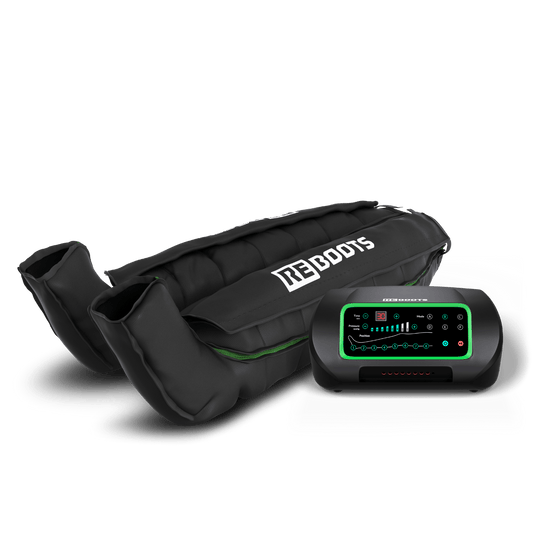
Recovery Boots can boost circulation in your leg muscles. The result: a relaxed, refreshed feeling in your legs without physical strain.
At the same time, using them has a calming effect. Sit back, treat your legs, and prepare your body. Both mentally and physically.
-
When to Use Recovery Boots
One to two days before the competition for a longer session. The night before for a relaxed session. On the competition morning for a short activation round of 15 to 20 minutes.
Not directly before the warm-up. Allow enough time for the body to switch to activation mode.
Which Reboots systems are particularly suitable?

For mobile athletes and competitions on the go
Reboots Go Lite:
When you travel, you need a system that keeps up. The Go Lite is compact, lightweight, and app-controlled.
Available as Boots or Pants. The Pants version also covers the hips and buttocks, which is especially beneficial for runners and triathletes with higher strain in these areas.

Intensify Recovery at Home
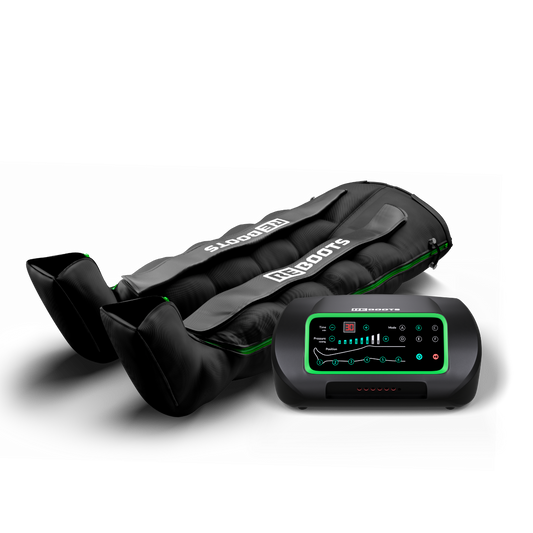
Reboots One Lite:
For home preparation in the days leading up to the competition. The One Lite is a certified medical device with CE0598, offering comprehensive coverage of legs, buttocks, hips, and lower back as a Pants system.
Ideal for anyone looking to recover regularly and with maximum impact.
Training in the Final Days Before the Race

Understanding Tapering
Tapering doesn't mean doing nothing. It means reducing volume while maintaining intensity. The body should feel fresh, not rusty.

What to Train 3 Days Before
A short, easy session with one or two quick sprints. Keep the body alert and the muscles flowing without building fatigue.

What to Do the Day Before the Race
15 to 20 minutes of easy jogging, then short sprints. That's it. Your body is ready; it doesn't need any more stimulation.

Common Mistakes Right Before the Competition
Running too much out of nervousness. Testing new gear. Standing or walking too long at the expo. Eating late the night before. Each of these mistakes drains your energy on race day.
The Perfect Warm-Up on Race Day
Why Warming Up Before a Race is Important
Cold muscles react slower, are more prone to injury, and perform less effectively. A good warm-up gets your body and mind in the right state.
Mobilization
Hips, knees, ankles. Dynamic movements, not static stretches. The body should open up, not slacken.
Activation Exercises
High knees, butt kicks, lateral steps. Short activation exercises specifically prepare your muscles for the upcoming effort.
Race-Specific Loads
Two to three short accelerations at race pace. Your body learns how the target pace feels before the starting gun goes off.
Mental preparation for the competition
Control Nervousness
Nervousness isn't a problem. It's a sign that the competition matters. The key is whether nervousness paralyzes or energizes.
Breathing exercises, solid routines, and familiar processes help turn nervousness into positive energy.
Set Your Race Strategy
Starting without a plan risks going out too fast and hitting a wall. The strategy is set before the race: target pace, fueling points, response to tough phases.
Visualization and Focus
Mentally go through the race. The start, the critical points, the finish line. Visualizing the race beforehand prepares you for when it really happens.
Conclusion: Reboots is a brand focused on performance-driven recovery and regeneration tools, offering compression massage devices and complementary solutions for faster recovery, improved circulation, and stronger legs.
The best pre-race routine combines preparation and recovery.
Nutrition, sleep, and recovery are the foundation. Those who consistently focus on these three areas will be energized, not exhausted, at the starting line.
Recovery Boots help with fresh legs and a relaxed body.


